

It's one of the most common midlife lab surprises: the same breakfast, the same walks, the same weight, and an LDL number that has quietly climbed twenty points. If that's you, the first thing to know is that you didn't miss anything, and you're in very familiar company. Cholesterol change during the menopausal transition is one of the best-documented shifts in women's midlife health, as we touched on in metabolic syndrome in women. Here's the mechanism behind it, and what to actually do.
Estrogen Was Managing Your Cholesterol Clearance
Your liver removes LDL cholesterol from the bloodstream using LDL receptors, and estrogen supports the activity of those receptors. For decades, that support ran silently in the background, one reason women's cardiovascular risk tends to lag men's until midlife.
Through perimenopause, estrogen becomes erratic and then declines, and LDL clearance slows with it. The result: LDL and total cholesterol rise, often over just a few years around the final menstrual period, while HDL may drift down and triglycerides drift up. Same inputs, different processing.
Why "Eat Better" Isn't the Whole Answer
Diet absolutely influences cholesterol, but if diet didn't change and cholesterol did, the explanation isn't on your plate. This matters for two reasons:
- It replaces guilt with information. A rising number isn't a report card on your discipline, it's data about a changing hormonal context.
- It changes the response. When the driver is hormonal, doubling down on an already-reasonable diet may not move the number much, while the full toolkit, reviewed with a physician, might.
The Numbers Worth Looking At (Together)
- 1.LDL and total cholesterol, the headline movers during the transition.
- 2.Triglycerides and HDL, the pair most tied to insulin resistance, which can shift in the same season.
- 3.The rest of the picture, blood pressure, blood sugar, waist, family history, because cholesterol is one input into cardiovascular risk, not the whole verdict. Our guide to metabolic lab work covers how these fit together.
What Actually Helps
The response is layered, and the layers add up:
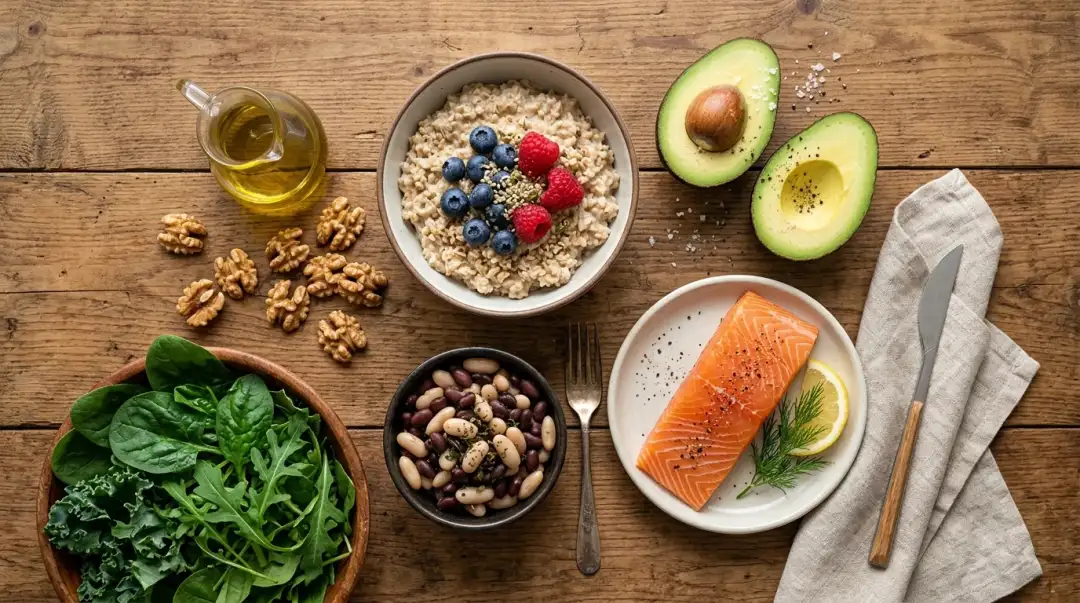
- Soluble fiber, deliberately, oats, beans, vegetables, psyllium, it binds cholesterol in the gut
- Swap saturated for unsaturated fats, olive oil, nuts, fish, rather than simply eating less
- Move in both modes, aerobic exercise for triglycerides and HDL, strength work for the muscle that protects metabolism
- Sleep and alcohol, fragmented sleep and regular alcohol both push lipids the wrong way
- The medical conversation, depending on your overall risk, lipid-lowering medication or a discussion of hormone-related options may be appropriate, decisions to make with a physician who sees your whole picture, not just one number
The Bottom Line
A cholesterol rise during perimenopause is common, explainable, and workable. The mistake isn't having the number go up, it's letting "your labs look a bit high, watch your diet" stand in for an actual evaluation of why, and what your full risk picture warrants. That whole-picture review, hormones, lipids, blood sugar, blood pressure, and life stage together, is exactly what our preventive and metabolic health care is built around, with the perimenopause transition treated as context, not a footnote.
Your next chapter in health starts here 💫