
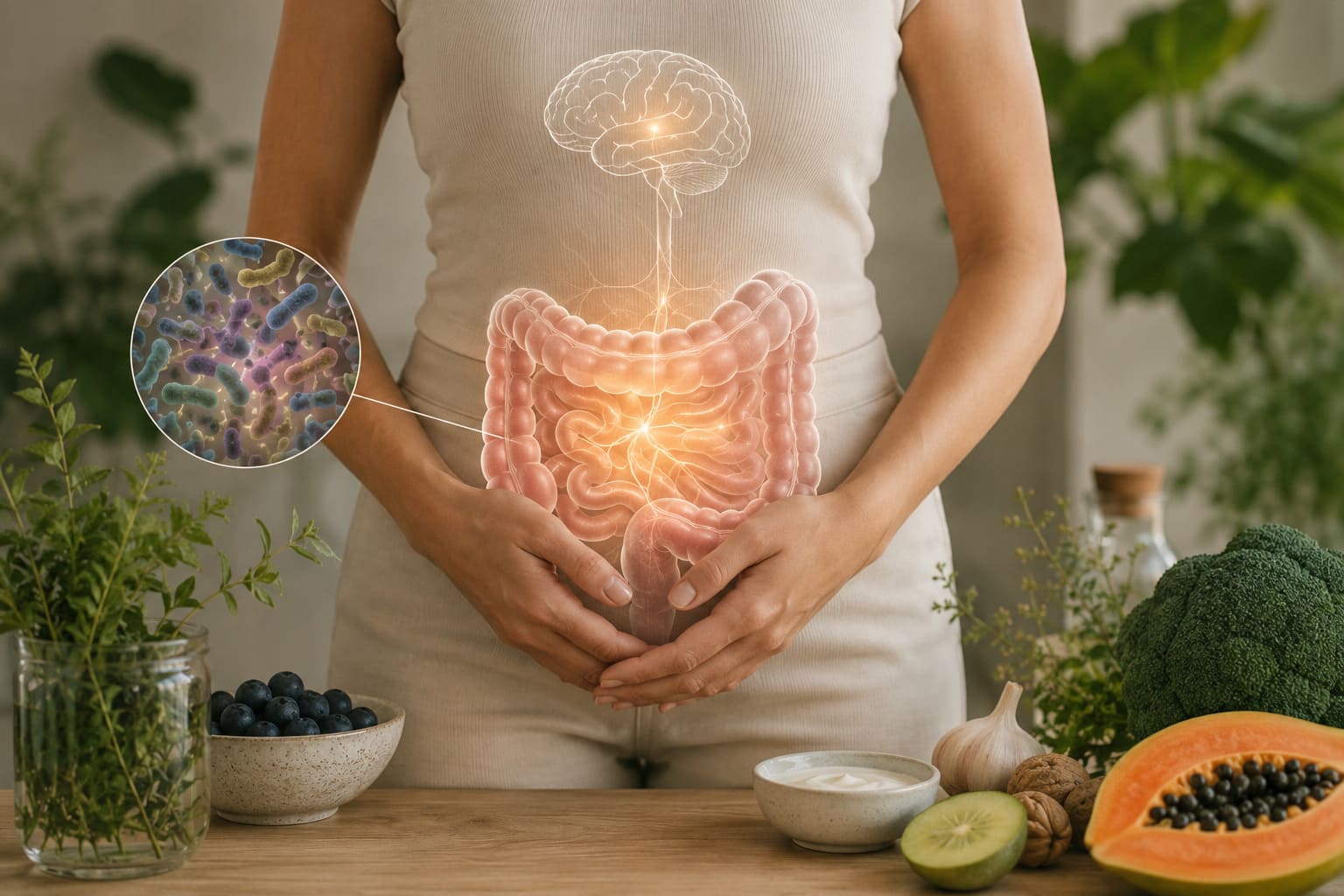
For most of modern medical history, the gut had a simple job description: receive food, break it down, absorb what's useful, send the rest on its way. A well-defined organ with a well-defined role, largely separate from the brain, the immune system, and hormonal health.
That picture has changed more in the last two decades than in the previous two centuries. And the shift matters well beyond digestion, it changes how we understand fatigue, hormonal symptoms, immune resilience, and long-term metabolic health.
The Gut-Brain Connection
The first real crack in the old model came from research into what's now called the gut-brain axis, a direct communication line between the digestive tract and the central nervous system, running largely through the vagus nerve.
This isn't a metaphor. The vagus nerve carries real signals in both directions, and the majority of its fibers run gut-to-brain rather than brain-to-gut, the gut is constantly reporting its internal state upward, not just receiving instructions.
For anyone living with chronic stress, the exhausted high performer whose labs keep coming back "normal," this matters directly. A nervous system under sustained strain changes gut motility, secretion, and the internal environment gut bacteria live in. Brain fog, energy crashes, and digestive symptoms often aren't separate complaints. They're two readouts from the same overloaded system, something we explore further in mind-body medicine.
Gut Microbiome, Metabolic Health, and Cancer Treatment
The next major shift came as sequencing technology made it possible to actually study the trillions of microbes living in the gut, not just infer their presence. What researchers found was a microbiome deeply involved in immune regulation, inflammation control, and metabolic signaling, territory that seemed unrelated to digestion entirely.
For metabolic health, this reframes midlife shifts in cholesterol and blood sugar as more than a matter of age or willpower. Gut bacteria influence inflammation and how the body handles fat storage and insulin sensitivity, part of why the same diet and exercise routine can stop producing the same results as the gut environment changes.
The clearest, most clinically significant version of this connection has emerged in oncology. A growing body of research links gut microbiome composition to how patients respond to chemotherapy and immunotherapy, not just how well they tolerate it, but whether treatment works. Specific gut bacteria have been associated with better response to immune checkpoint inhibitors, and higher microbial diversity has been linked to reduced treatment-related toxicity, including gastrointestinal side effects and complications after stem cell transplant. Disrupting the microbiome with broad-spectrum antibiotics during treatment has, in several studies, been associated with worse outcomes, a topic we've also touched on in how food choices support cancer prevention and recovery.
This is still an active, evolving area of research rather than a settled protocol, but it has moved gut health from a wellness afterthought to a genuine variable in cancer care, one reason gut-supportive strategies are increasingly discussed alongside conventional treatment rather than apart from it.
The Gut-Hormone Connection: Estrobolome and Perimenopause
More recently, a further layer of this picture came into focus: certain gut bacteria don't just coexist near estrogen metabolism, they actively participate in it.
This collection of bacteria, sometimes called the estrobolome, produces enzymes that determine how much estrogen gets reabsorbed into circulation versus cleared from the body. When gut health is disrupted, this process doesn't work as it should, estrogen clearance becomes erratic, not simply low.
This is a meaningful piece of the perimenopause picture. The hormonal symptoms many women experience in their 40s and 50s aren't only about the ovaries producing less estrogen, they're also shaped by how well the gut is managing the estrogen still in circulation. It's also part of why the fatigue and mood changes common in both burnout and perimenopause can look so similar: in both cases, a strained gut is affecting hormonal and neurological signaling at the same time.
The Ayurvedic Perspective on Gut Health
Modern research has been catching up to something Ayurvedic medicine described centuries ago. In Ayurveda, digestive strength, agni, was never treated as separate from mental clarity, energy, or immune resilience; it was considered the foundation all three were built on.
That's not a coincidence of language. Ayurvedic texts described poor digestion as producing ama, a kind of metabolic byproduct linked to sluggish thinking, low energy, and vulnerability to illness, long before there was any way to study gut bacteria, the vagus nerve, or inflammatory markers directly.
What's changed is that this connection can now be measured rather than only observed. Modern research supplies the mechanisms, the microbiome, the vagus nerve, the estrobolome, for a relationship between gut and whole-body health that older systems of medicine had already mapped through careful observation. In integrative practice, that combination is useful: the specificity of modern testing and mechanism, alongside a much older, practical understanding of how to actually support digestive strength day to day.

What This Adds Up To
None of these discoveries happened in isolation, but together they've moved medicine toward a very different picture of the body: not a set of separate systems, digestive, endocrine, immune, neurological, but one interconnected network, with the gut sitting near the center of it.
That reframing matters practically. A symptom that looks purely hormonal, purely cognitive, or purely metabolic may have a gut-related thread running underneath it, which is exactly why treating these as separate problems, handled by separate specialists, often falls short.
Where Integrative Medicine Fits
This is the core premise integrative medicine works from: the body doesn't operate in silos, so care shouldn't either. Understanding gut function isn't an alternative to conventional care, it's what fills in the connective tissue between a normal lab result and a symptom that hasn't gone away.
In practice, that means looking at gut health alongside hormones, stress physiology, and metabolic markers together, rather than treating each as an isolated issue to be managed on its own track.